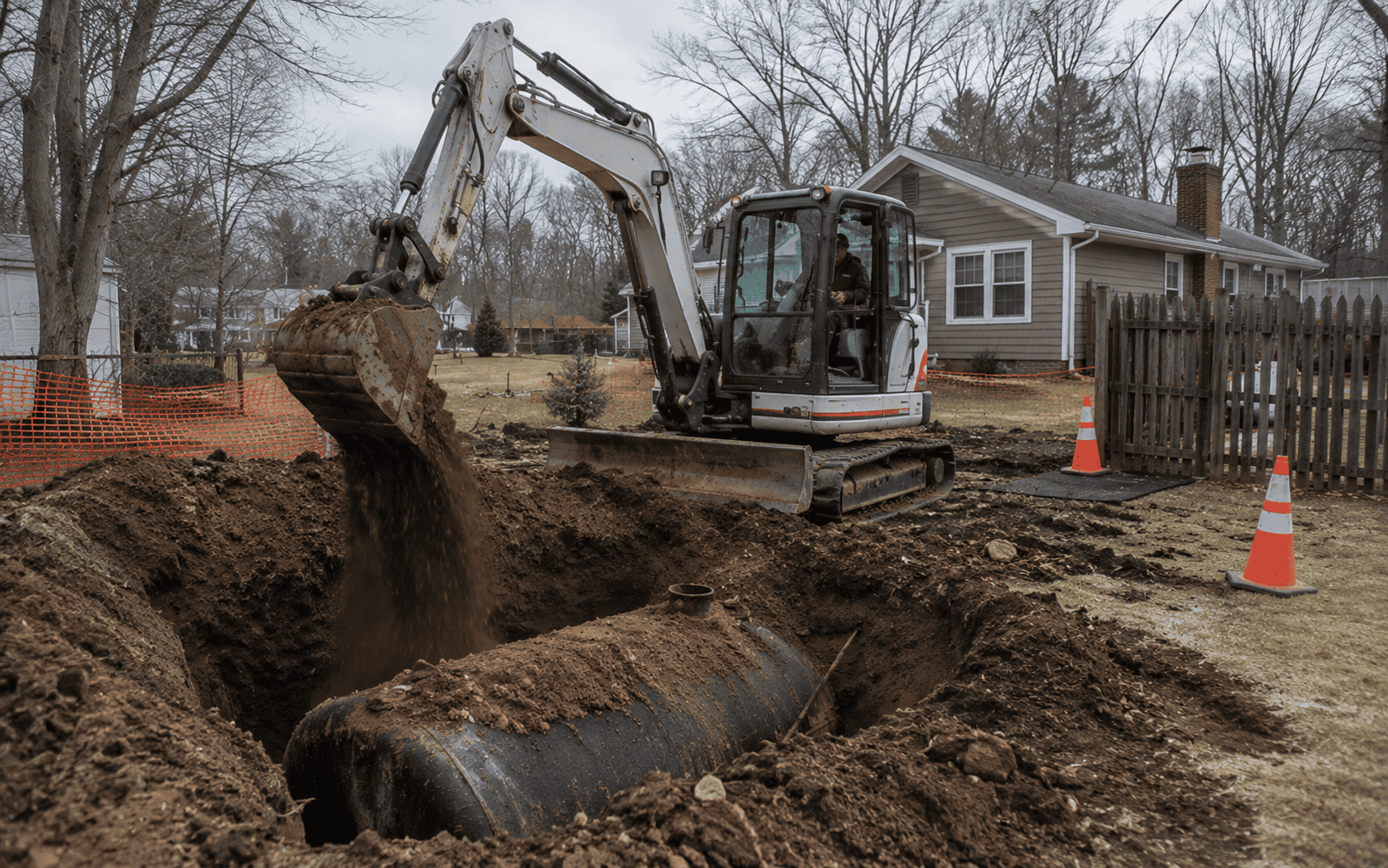
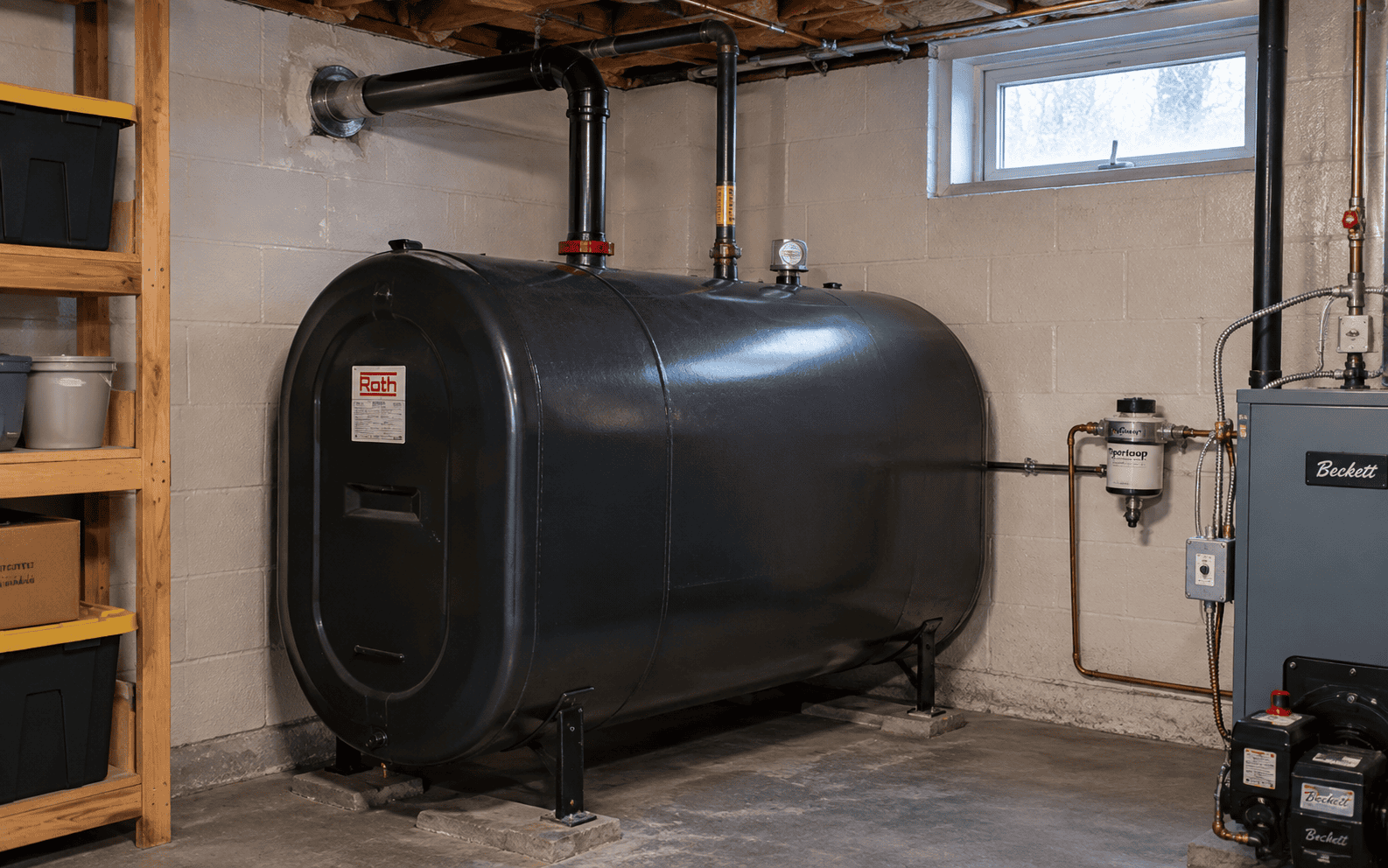
Buried in the yard or sitting in the basement, a tank at the end of its life is a liability. We handle the excavation, the removal or in-place abandonment, and the backfill.
Request an Estimate
Not every tank comes out of the ground. Depending on where it sits, what is built around it, and what your township requires, the right answer is sometimes full removal and sometimes proper closure in place.
Both are legitimate. What is not legitimate is leaving an unused tank sitting in the ground doing nothing, which is where problems and disclosure headaches come from later.
The tank is excavated, lifted out, and hauled away, and the excavation is backfilled and graded. This is the cleanest outcome and the one most buyers and lenders prefer to see documented.
Tank work is the point where our two oldest trades meet. The excavation crew that started this company in 1979 and the fuel side that has been servicing tanks since 1983 are the same business, which is why a tank job here does not involve coordinating two contractors who have never met.
We locate the tank, look at access for equipment, and determine whether removal or abandonment is the right call for your property.
Remaining fuel and sludge are pumped out and the tank is cleaned before any excavation begins. This part is not optional.
The tank is excavated and hauled out, or cut, cleaned, and filled in place depending on the approach chosen at the estimate.
The excavation is filled, compacted, and graded so the yard drains correctly rather than settling into a depression later.
Steel tanks buried in Long Island soil corrode. That is not a maintenance failure, it is what happens to steel in the ground over decades, and the tanks installed in the postwar building boom are now well past the point where anyone expected them to still be down there.
The consequences show up at the worst moments. A tank discovered during a home sale stops the transaction until it is addressed. A tank that has failed underground becomes a soil problem rather than a tank problem, and the cost difference between those two situations is substantial.
If the tank is still in service and the issue is sludge rather than age, additive treatment may be the answer instead. If you are replacing the heating system at the same time, our heating and cooling division handles that side, and switching tanks is a natural moment to look at the whole setup.
Other excavation services often pair with tank work, particularly grading once the ground is opened. Rated 4.3 stars across 46 Google reviews. Read what customers say. We handle tank jobs across the same service areas our trucks cover.

It depends on where the tank sits, whether equipment can reach it, and what your township requires. Full removal is the cleanest outcome and the one buyers and lenders most like to see. Abandonment in place is legitimate where removal is not practical. We tell you which applies after seeing the property.
Common signs are a fill pipe or vent pipe sticking out of the ground or through a foundation wall, capped lines in the basement running toward an exterior wall, or a patch of yard that settles differently. Older Long Island homes that converted to gas often left the original tank in the ground.
Yes. Remaining fuel and the sludge on the tank bottom are pumped out and the tank is cleaned before any excavation starts. That step comes before the equipment does, on every job, regardless of which approach is being used.
Requirements vary by township across Nassau and Suffolk, and tank work commonly does require one. We will tell you what applies to your address during the estimate.
A tank that has failed underground turns a tank job into a soil question, which is a different scope and a different cost. We will tell you what we find rather than working around it, and we will explain what the situation actually requires before anything else happens.
A straightforward removal with good equipment access is often a single day including backfill. Difficult access, tanks under decks or additions, or anything unexpected underground extends it. The estimate gives you a realistic timeline rather than a best case.
Across Nassau and Suffolk, the same range the rest of the business runs, dispatched from St. James.
Call the office and we will come out, locate it, and tell you what the job actually involves.
Call (631) 467-0422